Airing Down 101: What Tire Pressure Should You Run Off-Road?
18th Sep 2026
The Easiest (and Cheapest) Off-Road Upgrade You Can Make
A common mistake many beginners make when they first hit the logging roads in Tillamook State Forest is leaving their tire pressure at street levels. Running 35 or 40 PSI on a rocky trail means your 4x4 will bounce violently over every root, lose traction in the mud, and risk severe tire punctures. The process of “airing down” is getting your tires in the optimal state for trail driving, and our team at Iron Rigs 4x4 is ready to give you a simple guide to finding the perfect setup.
Three Massive Benefits of Dropping Your PSI
When you decrease your vehicle’s PSI, that provides several advantages, such as:
- Maximum traction: Your tires are able to flatten out and elongate, creating a longer footprint that acts like a tank tread to grip slick rocks and deep mud.
- Ride comfort: A fully inflated tire acts like a basketball bouncing over obstacles, but a deflated tire acts like a cushion, absorbing washboard gravel and smoothing out the ride for you and your suspension.
- Puncture Resistance: A softer tire is harder to puncture, with rigid tires more likely to tear when hit by a sharp rock. A softer one can wrap around a rock without the rubber breaking.
Finding the Sweet Spot for PNW Trails
Remember that exact tire pressure depends on the weight of your vehicle and its specific tire size, but we can at least offer a few baselines:
- Gravel roads and light trails should have between 20 to 25 PSI, which is perfect for high-speed logging roads where you want to smooth out the washboards, but still maintain stability for taking corners.
- Rocks, mud, and deep snow should have 12 to 18 PSI, which is standard for tougher trails at places like Browns Camp, as the tire will bulge significantly at the bottom and offer massive grip.
- Remember to not put your PSI under 12, as this can lead to “blowing a bead”. That’s when the tires are at such a low pressure that when you take a hard turn the tire can physically peel off the wheel.
How Low Can You Safely Go?
The air pressure inside the tire is what holds it against the wheel rim, which is why 12 to 15 PSI is generally the absolute lowest limit for a standard wheel. Beadlock wheels, on the other hand, use a physical metal ring to bolt the tire directly to the wheel, allowing hardcore rock crawlers to get as low as 3 or 4 PSI without losing the tire.
Deflators and Compressors
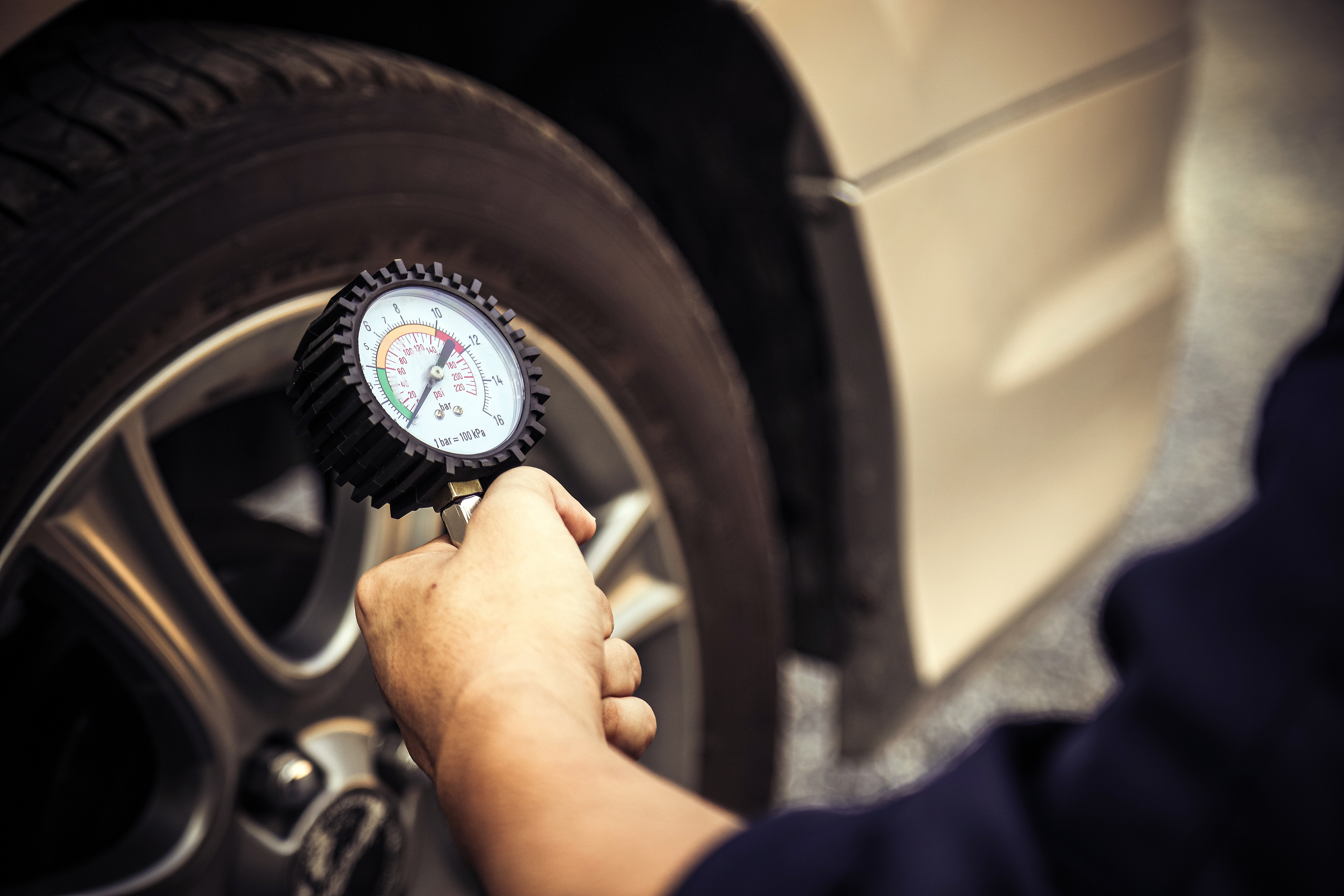
Make sure to carry gear for deflating and inflating your tires after arriving at and when leaving the trail. Pushing a key into your valve stem can take too long, so you should find a speedy deflator with a built-in gauge. Also don’t forget to put the air back inside with something like a portable 12V air compressor or hard-mounted dual air compressor.
Upgrade Your Wheels and Tires at Iron Rigs 4x4
Airing down requires a good set of all-terrain or mud-terrain tires to truly make a difference. Remember that if you’re still running factory street tires, dropping your pressure will not magically give you grip in deep mud. If you want to upgrade your vehicle for off-road traction, contact Iron Rigs 4x4 in Beaverton to talk with our wheel and tire specialists.